Solo and Sophisticated: The Technology Blueprint for Britain's One-Person Business
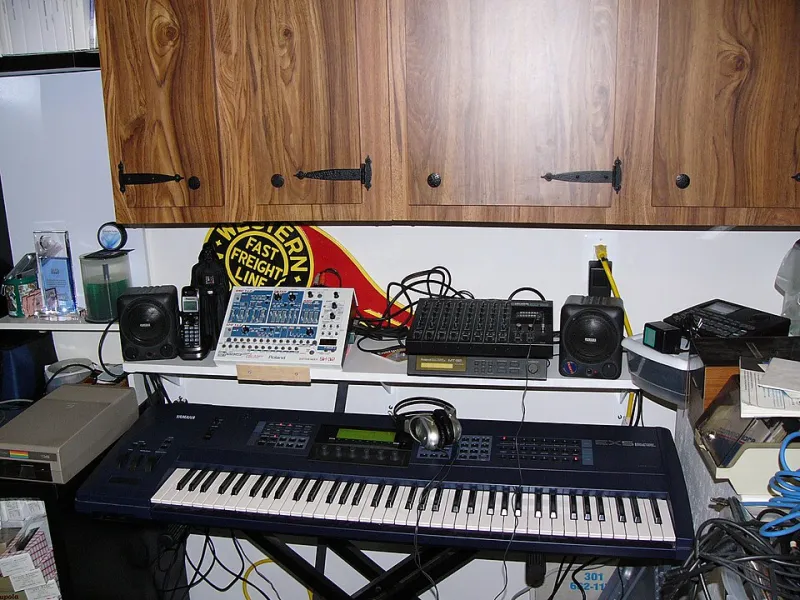
Photo: Pete Brown, CC BY 2.0, via Wikimedia Commons
Solo and Sophisticated: The Technology Blueprint for Britain's One-Person Business
There is a common assumption embedded in the language of business technology: that serious infrastructure requires a serious team. Enterprise-grade implies enterprise scale. Yet across Britain, a substantial and growing cohort of sole traders and micro-businesses is quietly dismantling this orthodoxy, building technology environments of genuine sophistication on budgets measured in hundreds rather than thousands of pounds.
These are not enthusiastic amateurs making do. They are pragmatic, informed buyers who understand that every pound spent on hardware must generate a measurable return — and who have discovered that self-managed, owned infrastructure frequently outperforms the subscription-dependent alternatives their larger competitors rely upon.
The Sole Trader's Unique Technology Calculus
Operating as a one-person business sharpens the mind wonderfully when it comes to technology expenditure. There is no IT committee to defer to, no procurement policy to hide behind, and no annual budget cycle to wait for. When a critical system fails, the sole trader feels the consequences immediately and personally.
This directness of consequence produces remarkably clear-eyed purchasing decisions. The freelance video editor, the independent accountant, the solo software developer — each approaches hardware investment with a specificity that corporate buyers rarely achieve. They know exactly which bottleneck is costing them time, and they address it with precision.
The result, in many cases, is a technology stack that is lean, purposeful, and quietly formidable.
The Workstation: Where Productivity Begins
For most sole traders, the primary workstation represents the single most important hardware investment. The temptation to economise here is understandable but counterproductive. A machine that struggles with the demands of daily professional work — slow rendering, sluggish application switching, insufficient RAM for multiple concurrent tasks — imposes a hidden tax on every working hour.
A well-specified workstation for a sole trader in 2025 need not be extravagant. A processor with eight or more cores, 32GB of RAM (expandable to 64GB), a fast NVMe SSD as the primary drive, and a discrete GPU appropriate to the work in question will handle the vast majority of professional workloads with authority. For those working primarily in productivity applications, a high-quality business-class machine in the £700 to £900 range represents excellent value. For creative professionals handling video, 3D work, or large-format photography, a more capable system in the £1,200 to £1,600 bracket is a justifiable investment.
Dual monitors deserve particular mention. The productivity evidence for multi-monitor setups is well established, and for a sole trader managing client communications, active work, and reference material simultaneously, a second display costing £150 to £250 may be the most efficient productivity investment available.
Local Storage: The NAS Advantage
Cloud storage subscriptions are convenient, but they carry ongoing costs that accumulate significantly over time and introduce a dependency on internet connectivity that can prove problematic. An increasing number of sole traders are turning to Network Attached Storage — NAS devices — as a more controlled alternative.
A two-bay NAS unit with two 4TB hard drives provides 4TB of redundant storage (in a mirrored configuration) for an initial outlay of approximately £300 to £400. This single investment replaces years of cloud storage subscription fees, keeps client data entirely within the business's control, and operates independently of broadband reliability. For sole traders handling sensitive client information — a consideration that applies to accountants, solicitors, consultants, and healthcare practitioners alike — local data sovereignty is not merely a convenience but a professional obligation.
More capable four-bay units, which allow for greater storage expansion and more sophisticated redundancy configurations, are available in the £400 to £600 range and represent a sensible growth investment for businesses whose data volumes are increasing.
Networking Infrastructure: The Foundation Beneath Everything
A sole trader's entire technology stack depends on reliable network infrastructure, yet this is frequently the area where investment is most readily deferred. Consumer-grade routers provided by ISPs are adequate for general household use but often lack the stability and configurability that a home-based business demands.
A business-capable router — from established manufacturers offering managed switching and reliable Wi-Fi 6 performance — costs between £100 and £250 and offers meaningfully superior performance and control. For sole traders whose work involves large file transfers, video conferencing, or remote server access, this investment pays dividends in reduced frustration and improved reliability.
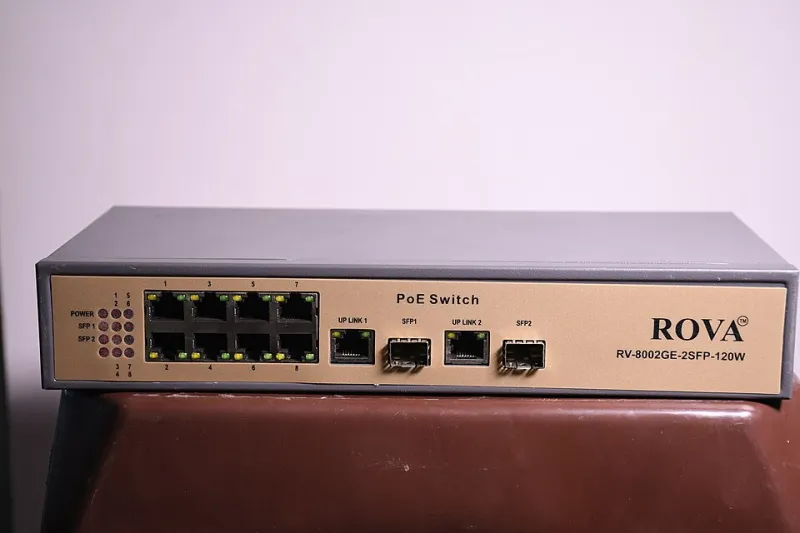
A small unmanaged switch to connect wired devices in the home office adds further stability for minimal cost, typically under £40.
Prioritising When Every Pound Counts
For the sole trader building or upgrading a technology stack with finite resources, a clear prioritisation framework is valuable. The workstation comes first — it is the tool upon which all revenue-generating activity depends. Local storage follows, replacing recurring cloud costs with a one-time capital investment. Networking infrastructure third, as the foundation that all other technology relies upon. Peripherals — quality keyboard, precision mouse, a reliable headset for client calls — complete the picture without demanding significant expenditure.
Britain's sole traders have demonstrated that enterprise-grade thinking does not require enterprise-scale budgets. With careful hardware selection and a preference for owned over subscribed infrastructure, the one-person business can operate with a technology foundation that is robust, responsive, and genuinely fit for professional purpose.