Broadband Bottlenecks: Why Ultrafast Connectivity Means Nothing When Your Office Hardware Cannot Keep Pace
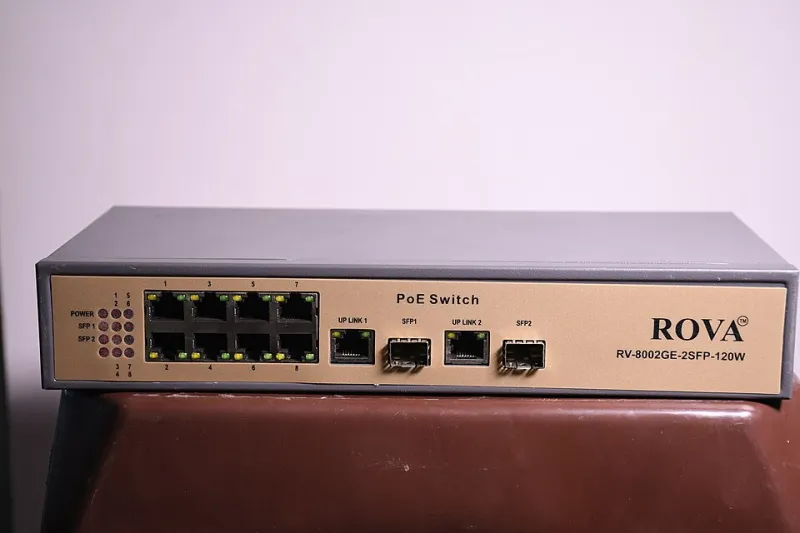
Photo: Bkvrova, CC BY-SA 4.0, via Wikimedia Commons
The marketing language surrounding ultrafast broadband in the United Kingdom is compelling. Gigabit connectivity, symmetrical upload speeds, and near-zero latency are presented as transformative business tools — and in principle, they are. Yet for a substantial proportion of British SMEs, the full-fibre connection terminating at the premises wall represents the beginning of a performance journey that their internal infrastructure is wholly unprepared to complete.
 Photo: United Kingdom, via www.nationsonline.org
The result is a peculiar and costly irony: businesses paying £60 to £120 per month for premium broadband packages are, in practice, operating at a fraction of the advertised speed — not because their ISP is failing to deliver, but because the hardware inside their own offices is incapable of accepting what is being offered.
Where the Speed Actually Goes
When a broadband engineer installs a gigabit connection, the optical fibre terminates at a network termination point, typically feeding into a router or modem provided by the ISP. From that point, the responsibility for distributing connectivity across the premises falls entirely to the business's own equipment — and this is where performance commonly collapses.
The three most prevalent hardware bottlenecks found in British SME environments are as follows.
Network Interface Cards (NICs): Many desktop computers and laptops deployed in UK offices still carry 100 Megabit per second NICs as standard. These components, common in hardware purchased before 2015, impose a hard ceiling of 100Mbps on any device they serve, regardless of the speed available at the router. A gigabit connection feeding into a 100Mbps NIC delivers, at best, one-tenth of its potential.
Unmanaged Fast Ethernet Switches: Office switches purchased during the mid-2000s to early 2010s frequently operate at Fast Ethernet speeds — again, 100Mbps. In environments where multiple devices share a single switch, the aggregate throughput limitation compounds across the network. A ten-port Fast Ethernet switch in a busy office is not merely limiting individual devices; it is constraining the entire segment of the network it serves.
Inadequate Routers: Consumer-grade routers, often provided free of charge by residential ISPs and pressed into business service, frequently lack the processing capability to route gigabit traffic under load. These devices may connect successfully to a gigabit line but throttle throughput internally due to insufficient CPU capacity or memory. The advertised speed is achievable only under ideal, single-device conditions — not during the demands of a working office day.
Quantifying the Cost of Complacency
The financial implications of this mismatch extend beyond the wasted broadband subscription. Consider a ten-person office where each employee spends a conservative fifteen minutes per day waiting for files to transfer, cloud applications to synchronise, or video calls to stabilise due to constrained connectivity. At an average UK hourly wage of £16.50, that represents approximately £2.75 per employee per day in lost productive time — or £27.50 across the team. Over a 250-day working year, the cumulative productivity loss reaches £6,875 annually.
For businesses operating in sectors where connectivity directly supports revenue generation — logistics, professional services, digital media, or e-commerce — the figures are considerably higher. A single dropped video call with a client, a delayed file submission, or an interrupted cloud backup can carry consequences that dwarf the cost of a new switch.
Yet the networking hardware required to resolve these issues is not prohibitively expensive. A managed Gigabit Ethernet switch sufficient for a ten-to-fifteen person office can be sourced for between £80 and £200. Gigabit NICs for desktop machines cost between £15 and £30 per unit. A business-grade router capable of sustaining gigabit throughput under realistic office conditions is available for £150 to £400. The aggregate investment to bring a modest office network into alignment with its broadband capability is, in most cases, recoverable within weeks through restored productivity alone.
Conducting a Hardware Audit: A Practical Checklist for UK Business Owners
The following checklist provides a structured approach for British SMEs to assess whether their internal networking infrastructure is genuinely capable of delivering the connectivity for which they are paying.
Step 1 — Establish a baseline speed measurement. Connect a laptop or desktop directly to the ISP router via Ethernet cable and run a speed test using a reputable service. Record the result. This represents the maximum throughput available from the ISP connection itself.
Step 2 — Test speed at representative workstations. Run the same speed test from several machines across the office, connected through the existing switches and cabling. Compare the results to the baseline. Any significant discrepancy — particularly a result of 100Mbps or below on a gigabit line — indicates a hardware bottleneck somewhere in the chain.
Step 3 — Identify switch specifications. Locate all network switches in the office and note the model numbers. Cross-reference these against manufacturer specifications to determine whether they operate at Fast Ethernet (100Mbps) or Gigabit Ethernet (1000Mbps) standards. Any Fast Ethernet switch is a candidate for replacement.
Step 4 — Audit NIC specifications on critical workstations. On Windows machines, this information is accessible through Device Manager under the Network Adapters category. Identify any adapters listed as 100Mbps or Fast Ethernet. Prioritise replacement or supplementary Gigabit NIC installation for machines used in bandwidth-intensive roles.
Step 5 — Evaluate the router under load. Consumer-grade routers often perform adequately during a single-device speed test but degrade significantly under the concurrent demands of a working office. Monitor router CPU and memory utilisation during peak hours using the device's administrative interface. Sustained high utilisation indicates that a business-grade replacement is warranted.
Step 6 — Inspect physical cabling. Gigabit Ethernet requires Cat5e cabling at minimum, with Cat6 preferred for new installations. Cat5 cabling — common in older UK commercial premises — may limit performance to 100Mbps regardless of the hardware connected to it. If the building's structured cabling is of uncertain specification, professional testing is advisable.
Investing in Infrastructure That Matches Ambition
Broadband providers across the United Kingdom have invested heavily in expanding full-fibre availability. The Government's Project Gigabit programme continues to extend connectivity into areas previously reliant on ageing copper infrastructure. These are substantive improvements that genuinely expand what is possible for British businesses.
 Photo: Project Gigabit, via opensource.com
However, the value of that external infrastructure investment is contingent on the internal network being capable of receiving it. A gigabit connection feeding into a legacy switch and a collection of 100Mbps workstations is not a gigabit office — it is a Fast Ethernet office with an expensive broadband contract.
British SMEs that undertake a structured hardware audit, identify the specific components creating performance ceilings, and invest appropriately in replacement equipment will find that the broadband speed they are already paying for becomes, for the first time, genuinely accessible. The connectivity infrastructure inside the office wall is not a secondary consideration — it is the final and most consequential link in the chain.