The Missing Link: How Inferior Networking Hardware Sabotages Britain's Premium Broadband Investment
The Great Broadband Paradox Affecting British Workforces
Millions of UK households and businesses have invested in premium broadband packages promising lightning-fast connectivity, yet many continue experiencing sluggish performance that undermines productivity and frustrates users. The assumption that internet service provider infrastructure bears responsibility for poor performance often proves incorrect, with the real bottleneck existing much closer to home.
The networking hardware that bridges the gap between broadband connections and end-user devices frequently operates as the limiting factor in overall connectivity performance. Outdated network interface cards, inadequate switches, ageing wireless adapters, and mismatched ethernet standards create artificial performance ceilings that prevent users from accessing the full capability of their broadband investment.
Understanding the Internal Network Infrastructure Chain
Modern broadband connections deliver data to premises through sophisticated infrastructure designed to handle substantial throughput. However, this data must traverse multiple hardware components before reaching the applications where users actually experience connectivity performance.
The journey begins at the router provided by the internet service provider, continues through internal networking equipment such as switches and wireless access points, and concludes at the network interface hardware within individual devices. Each component in this chain possesses specific performance characteristics that can limit overall throughput regardless of the broadband connection's theoretical capacity.
Many UK properties utilise networking hardware installed years ago when broadband speeds were substantially lower. Equipment adequate for 30Mbps connections often struggles to handle modern 100Mbps or gigabit services effectively, creating the frustrating disconnect between promised and delivered performance.
Network Interface Cards: The Forgotten Performance Gateway
Network interface cards (NICs) within computers and laptops represent one of the most overlooked components affecting connectivity performance. Older systems frequently feature 100Mbps ethernet ports that cannot utilise faster broadband connections fully, whilst budget devices may include network adapters with limited processing capability.
Gigabit ethernet has become the standard for modern networking, yet numerous systems in active use across Britain continue operating with Fast Ethernet (100Mbps) interfaces. Users experiencing connectivity frustrations should verify their network adapter specifications, as upgrading to gigabit-capable hardware often resolves performance limitations immediately.
Wireless network adapters present additional complexity, as Wi-Fi standards have evolved significantly over recent years. Devices equipped with 802.11n wireless adapters cannot achieve the performance levels possible with 802.11ac or Wi-Fi 6 implementations, regardless of router capabilities.
The Ethernet Standards Compatibility Challenge
Ethernet technology encompasses multiple standards with varying performance characteristics, and mismatched implementations can significantly impact throughput. Cat5 cabling, whilst adequate for basic connectivity, lacks the bandwidth capacity to support gigabit speeds reliably over longer distances.
Cat5e and Cat6 cables provide the minimum specifications for gigabit ethernet deployment, whilst Cat6a supports 10-gigabit speeds over extended distances. UK properties with older structured cabling may require infrastructure upgrades to achieve optimal performance from modern broadband connections.
The physical condition of ethernet cables also influences performance substantially. Damaged cables, poor terminations, and excessive cable lengths can introduce signal degradation that limits effective throughput regardless of the underlying hardware capabilities.
Wireless Infrastructure: Beyond Router Specifications
Many remote workers rely primarily on wireless connectivity, yet Wi-Fi performance depends on factors extending far beyond router specifications. The wireless adapters within client devices must support equivalent standards and channel configurations to achieve optimal performance.
Wi-Fi 6 routers deliver substantial performance improvements, but devices equipped with older wireless adapters cannot access these enhancements. Mixed wireless environments often operate at the lowest common denominator, with legacy devices limiting performance for all connected equipment.
Channel congestion represents another significant factor affecting wireless performance in densely populated areas. UK urban environments frequently feature numerous overlapping wireless networks that compete for limited spectrum, reducing effective throughput even with premium hardware.
Switch Infrastructure: The Overlooked Bottleneck
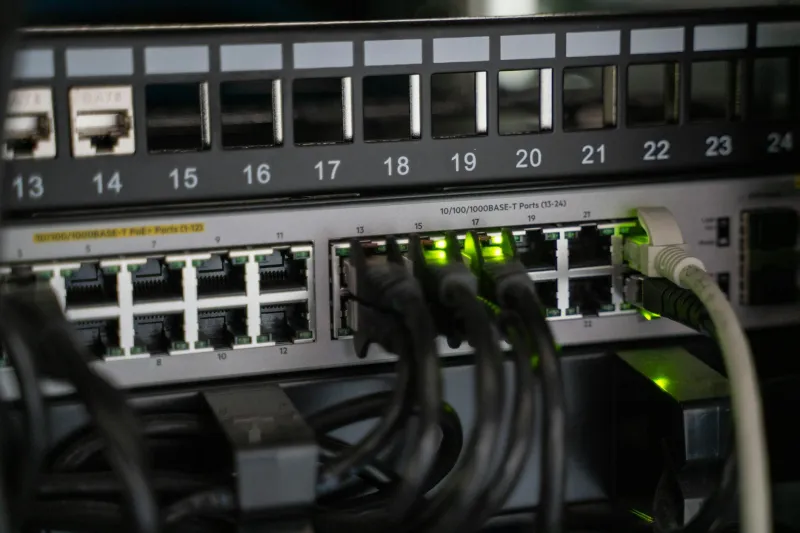
Businesses and home offices utilising ethernet switches to expand network connectivity may encounter performance limitations if these devices lack adequate specifications. Unmanaged switches with limited backplane bandwidth can become bottlenecks when multiple devices attempt simultaneous high-throughput operations.
Managed switches offer advanced features including Quality of Service (QoS) controls that can prioritise critical traffic, but many organisations continue using basic unmanaged switches that treat all data equally. This approach can result in video conferencing and cloud application performance suffering when other devices consume available bandwidth.
The age of switch hardware also influences performance significantly. Older switches may lack the processing power to handle modern network loads effectively, introducing latency and packet loss that degrades user experience.
Diagnostic Framework for UK Remote Workers
Identifying networking hardware bottlenecks requires systematic testing that isolates individual components within the connectivity chain. Users should begin by testing broadband performance using wired connections directly to the ISP router, establishing baseline performance measurements.
Subsequent testing through internal networking equipment reveals whether switches, wireless access points, or structured cabling introduce performance limitations. Speed test results that vary significantly between direct router connections and connections through internal infrastructure indicate hardware bottlenecks.
Device-specific testing can identify network adapter limitations, particularly for older laptops and desktop systems. USB-to-ethernet adapters provide cost-effective solutions for upgrading network interface capabilities without requiring internal hardware modifications.
Strategic Hardware Upgrade Pathways
For organisations experiencing networking performance limitations, strategic hardware upgrades often provide substantial improvements at reasonable cost. Gigabit-capable managed switches typically cost £50-200 depending on port count and features, yet can transform network performance for multiple users.
Wireless infrastructure upgrades to Wi-Fi 6 access points deliver improved performance and capacity, particularly beneficial for environments supporting numerous concurrent devices. These upgrades often provide better return on investment than broadband speed increases when existing wireless hardware represents the limiting factor.
Network interface upgrades for older systems can be accomplished through USB 3.0 gigabit ethernet adapters or PCIe network cards, providing cost-effective solutions that avoid complete system replacement whilst enabling full broadband utilisation.
The Business Case for Networking Investment
Poor connectivity performance directly impacts productivity and operational efficiency for UK businesses and remote workers. The frustration of slow file transfers, choppy video conferences, and unresponsive cloud applications creates tangible costs that often exceed the investment required for appropriate networking hardware.
Organisations that address networking infrastructure proactively often discover that relatively modest hardware investments deliver substantial performance improvements, enabling full utilisation of existing broadband investments whilst supporting business growth and remote work effectiveness.