Space-Conscious Computing: How Britain's Renters Are Mastering High-Performance Setups in Compact Living Spaces
Space-Conscious Computing: How Britain's Renters Are Mastering High-Performance Setups in Compact Living Spaces
The British housing landscape has fundamentally shifted. With rental accommodation now housing 37% of adults across the UK, the traditional approach to home office design faces unprecedented challenges. Unlike homeowners who can freely modify their spaces, renters navigate a complex web of landlord restrictions, deposit protection concerns, and spatial limitations that demand innovative technological solutions.
The Rental Reality: Computing Within Constraints
Modern rental agreements typically prohibit wall mounting, cable routing through structural elements, and permanent furniture modifications. These restrictions, combined with increasingly compact living spaces—particularly in London where the average rental property offers just 62 square metres—force tenants to reimagine their relationship with technology.
Traditional desktop computing setups, with their sprawling tower cases, multiple monitors requiring substantial desk real estate, and extensive cabling requirements, simply don't align with rental living realities. The solution lies in embracing modular, compact, and genuinely portable computing architectures that deliver professional-grade performance without permanent installation requirements.
Mini-ITX: Maximum Performance, Minimum Footprint
The mini-ITX form factor represents a paradigm shift for space-conscious computing. Modern mini-ITX motherboards support full-sized processors, including Intel's latest Core i7 and AMD's Ryzen 7 series, whilst occupying just 170mm × 170mm of space. When paired with compact cases like the Fractal Design Node 202 or Silverstone RVZ03, the entire system footprint reduces to approximately the size of a PlayStation 5.
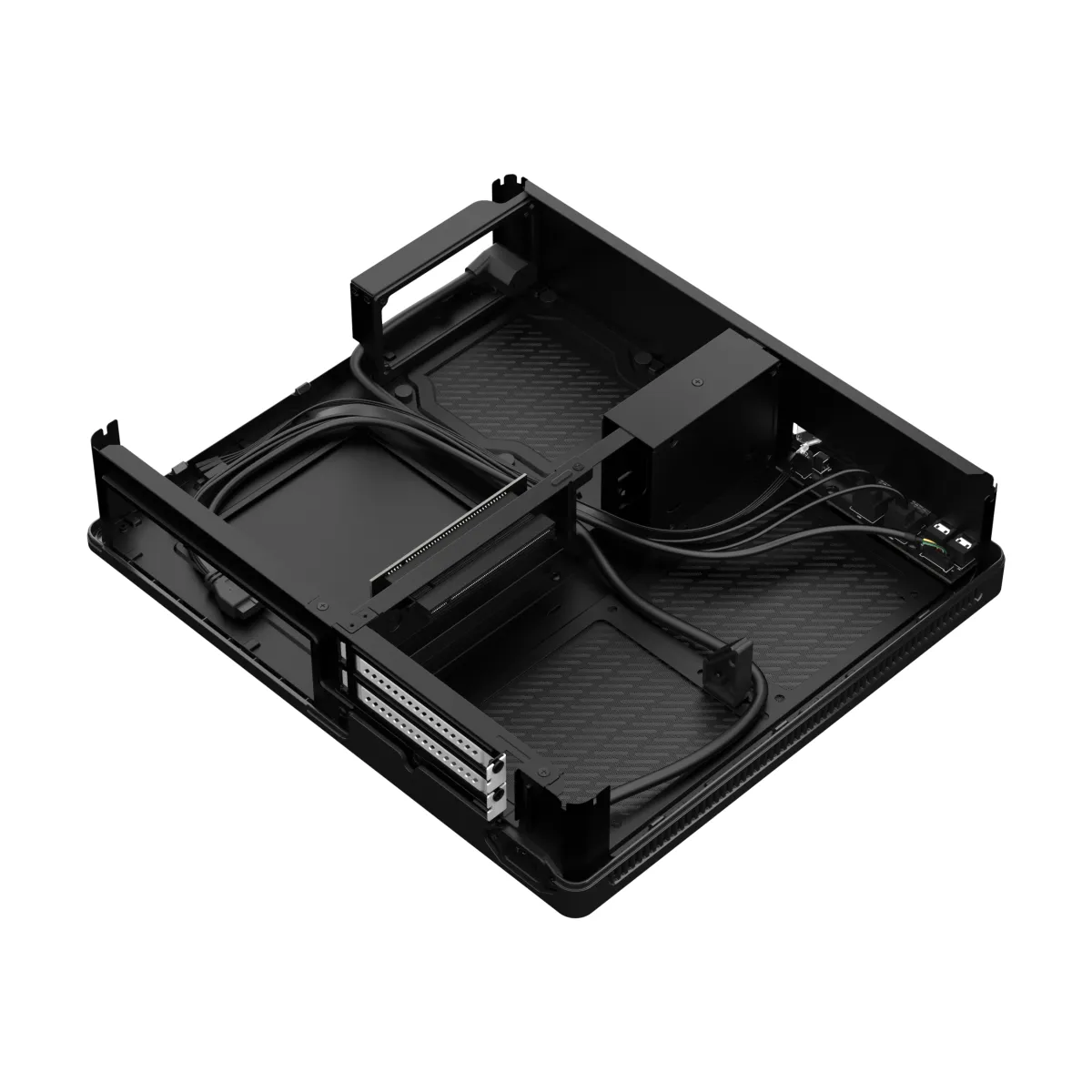 Photo: Fractal Design Node 202, via www.fractal-design.com
These systems accommodate discrete graphics cards up to 330mm in length, sufficient for professional applications including CAD work, video editing, and even gaming. The thermal efficiency of modern components means that compact cooling solutions—often just 47mm tall—can maintain optimal temperatures without the industrial-grade cooling systems that larger cases accommodate.
For renters, this translates to a complete workstation that can be easily relocated, requires no permanent installation, and delivers performance matching traditional full-sized systems. The entire setup can be established or dismantled within minutes, crucial for tenants facing sudden relocation or landlord inspections.
Wireless Infrastructure: Eliminating Cable Dependency
Cable management presents particular challenges in rental environments where routing options are severely limited. Modern wireless technology has evolved to eliminate most connectivity constraints without performance compromises.
Wi-Fi 6E delivers speeds exceeding 2Gbps with latency below 10ms, sufficient for professional video conferencing, cloud computing, and real-time collaboration. For users requiring absolute reliability, mobile broadband solutions using 5G networks provide genuine redundancy without fixed-line dependencies.
Peripheral connectivity has similarly evolved. Wireless keyboards and mice now offer latency below 1ms—imperceptible to human users—whilst maintaining battery life exceeding six months. Professional-grade wireless monitors, utilising technologies like Intel WiGig, eliminate the need for HDMI or DisplayPort cables whilst supporting 4K resolution at 60Hz.
Furniture Integration: Computing Without Compromise
The most innovative rental computing solutions integrate technology directly into furniture, eliminating the traditional separation between workspace and equipment storage. Height-adjustable desks with integrated cable management channels accommodate all necessary connections whilst maintaining clean aesthetics that satisfy landlord requirements.
Under-desk mounting systems, secured through clamps rather than permanent fixtures, position computing hardware away from valuable surface space whilst maintaining accessibility. These solutions typically support systems weighing up to 15kg, sufficient for even high-performance gaming systems.
Storage solutions have evolved similarly. NAS systems designed for desktop integration offer enterprise-grade data protection whilst occupying minimal space. These devices, often smaller than hardback books, provide RAID protection, remote access capabilities, and backup solutions that traditional external drives cannot match.
Performance Metrics: Compact Without Compromise
Benchmark testing reveals that modern compact computing solutions deliver performance within 5% of equivalent full-sized systems. The latest generation of mobile processors, including Intel's 12th generation Core series and AMD's Ryzen 6000 series, offer thermal design profiles specifically optimised for compact installations.
Graphics performance, traditionally the primary limitation of compact systems, has improved dramatically. The NVIDIA RTX 4060 and AMD RX 7600, both available in compact form factors, deliver performance suitable for professional creative work, 4K video editing, and high-refresh gaming whilst operating within 150W power envelopes.
Financial Considerations: The Rental Premium
Compact computing solutions typically command a 15-20% premium over equivalent full-sized components. However, this cost differential must be evaluated against rental-specific benefits including portability, reduced setup time, and elimination of professional installation requirements.
For tenants facing regular relocation—common in London's rental market—the time savings alone justify the premium. Professional system setup and cable management services cost £150-300 per installation, expenses that compact systems eliminate entirely.
The Future of Rental Computing
As Britain's rental sector continues expanding, technology manufacturers increasingly recognise this demographic's unique requirements. Emerging solutions include modular computing systems that separate processing units from display components, allowing users to maintain consistent performance whilst adapting to different spatial constraints.
Cloud computing integration further reduces local hardware requirements. Services like Microsoft Azure Virtual Desktop and NVIDIA GeForce Now provide access to high-performance computing resources without local hardware limitations, particularly relevant for users in shared accommodation where noise and heat generation present additional constraints.
Conclusion: Redefining Workspace Possibilities
Britain's renters are pioneering a new approach to computing that prioritises flexibility, portability, and performance within real-world constraints. These solutions demonstrate that spatial limitations need not compromise technological capability, offering lessons valuable to both residential and commercial environments facing similar space pressures.
The rental computing revolution reflects broader changes in how we interact with technology—from ownership models to spatial relationships. As these solutions mature, they're likely to influence workspace design across all sectors, proving that constraint often drives the most innovative solutions.