Beyond the Bin: Unlocking Hidden Value in Britain's Decommissioned Business Hardware
Beyond the Bin: Unlocking Hidden Value in Britain's Decommissioned Business Hardware
In server rooms and storage cupboards across Britain, millions of pounds worth of decommissioned IT equipment sits idle—forgotten assets that could fund the next generation of business technology. Research indicates that UK businesses hold an average of £47,000 worth of unused IT equipment per organisation, yet fewer than 23% have systematic processes for extracting value from these dormant assets.
This represents more than poor housekeeping. It's a fundamental misunderstanding of modern hardware economics and lifecycle management that costs British businesses both money and competitive advantage. The solution requires rethinking how organisations approach technology transitions, viewing end-of-life equipment not as waste, but as a strategic asset requiring active management.
The Hidden Warehouse: Britain's Forgotten IT Assets
Walk through any established British business and you'll likely encounter the same scene: cupboards filled with outdated laptops, server rooms housing decommissioned rack equipment, and drawers stuffed with surplus components. These accumulations represent years of technology refreshes where old equipment was simply set aside rather than properly processed.
The scale of this phenomenon is staggering. A recent audit of 200 UK SMEs revealed that the average organisation holds 47 unused laptops, 23 decommissioned servers, and countless peripherals and components. At current secondary market values, this represents approximately £47,000 per organisation in recoverable assets.
Larger enterprises face even more significant accumulations. Financial services firms, with their frequent hardware refresh cycles driven by regulatory requirements, often hold hundreds of decommissioned workstations and servers. Technology companies, despite their presumed expertise, frequently struggle with equipment disposal due to data security concerns and compliance requirements.
The problem extends beyond simple storage costs. Decommissioned equipment occupies valuable real estate, requires environmental controls to prevent deterioration, and poses security risks through unmanaged data storage. More critically, the value of stored equipment depreciates rapidly—a three-year-old server worth £800 today will likely be worth £200 in twelve months.
Market Dynamics: Understanding Secondary Hardware Values
The secondary market for business IT equipment has evolved dramatically over the past decade. What was once a niche industry serving budget-conscious buyers has become a sophisticated marketplace with established pricing structures, quality standards, and distribution channels.
Enterprise servers retain significant value even after primary deployment cycles. A Dell PowerEdge R740 server, typically refreshed after four years in enterprise service, maintains approximately 35% of its original value in the secondary market. For organisations that paid £8,000 for such systems, this represents £2,800 in recoverable value per unit.
Workstation hardware follows similar patterns, though depreciation rates vary significantly by component type. Professional graphics cards maintain value particularly well, with models like the NVIDIA Quadro RTX series retaining 40-50% of original value after three years. This reflects continued demand from creative industries and engineering firms that require professional-grade graphics capabilities but cannot justify new equipment costs.
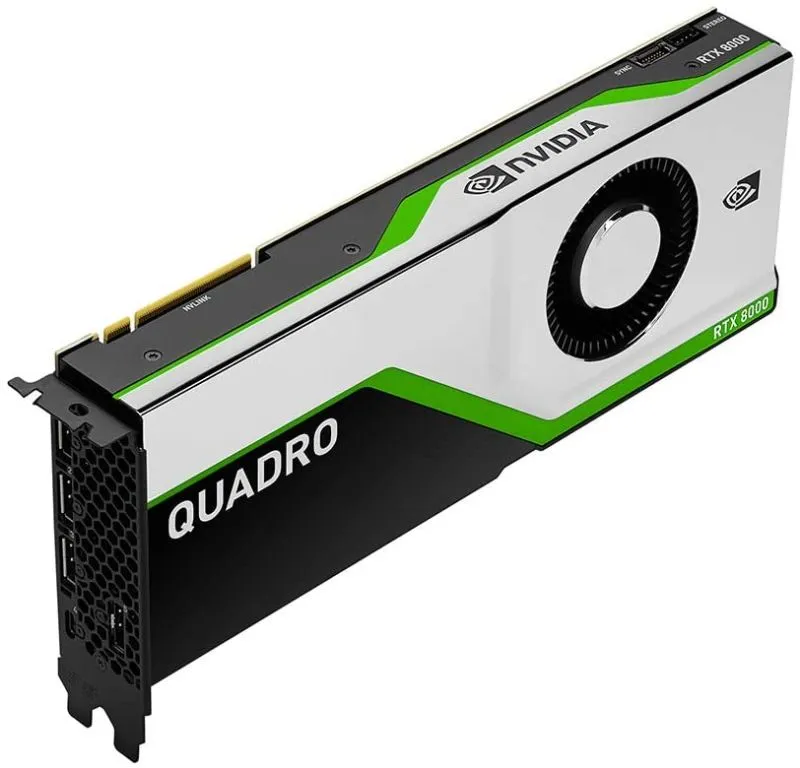 Photo: NVIDIA Quadro RTX, via www.grafikkarten.com
Memory and storage components represent the most stable value retention categories. Enterprise-grade RAM maintains consistent demand due to its compatibility across multiple server generations. SSD storage, particularly enterprise models with high endurance ratings, commands premium prices in secondary markets due to their proven reliability and remaining service life.
Legal Obligations: Navigating WEEE and Data Protection
British businesses face complex legal obligations when disposing of IT equipment, obligations that many organisations inadequately understand or address. The Waste Electrical and Electronic Equipment (WEEE) Regulations 2013 establish specific requirements for electronic waste disposal, including mandatory data destruction and environmental compliance measures.
Data protection represents the most critical compliance area. The UK GDPR requires organisations to ensure complete data destruction when disposing of storage devices. This extends beyond simple file deletion to include secure wiping procedures that meet recognised standards like DoD 5220.22-M or NIST 800-88. Failure to properly sanitise data storage devices can result in significant penalties and reputational damage.
The WEEE regulations establish producer responsibility for electronic waste disposal, but this doesn't eliminate business obligations. Organisations must demonstrate proper disposal through authorised treatment facilities and maintain disposal records for audit purposes. Improper disposal can result in fines up to £5,000 per incident, making compliance both a legal and financial imperative.
Certificate of destruction documentation has become increasingly important for compliance and audit purposes. Reputable disposal companies provide detailed certificates confirming data destruction methods, environmental compliance, and material recovery rates. These certificates serve as legal protection and demonstrate corporate responsibility to stakeholders and regulators.
Strategic Lifecycle Planning: From Purchase to Profit
Effective hardware lifecycle management begins at the procurement stage, not when equipment reaches end-of-life. Organisations that plan disposal strategies during initial purchases consistently achieve better value recovery than those addressing disposal reactively.
Asset tagging and inventory management form the foundation of successful lifecycle programmes. Modern asset management systems track not just equipment location and specifications, but also depreciation schedules, maintenance history, and market values. This information enables informed decisions about refresh timing and disposal strategies.
Refresh cycle optimisation represents a critical strategic decision. Whilst accounting practices often depreciate IT equipment over five years, optimal refresh cycles for value recovery typically range from three to four years. This timing maximises the balance between operational utility and residual value, ensuring equipment disposal occurs before significant value erosion.
Bulk disposal strategies can significantly improve recovery rates compared to individual item sales. Organisations disposing of 50+ similar items often achieve 15-20% higher unit values through bulk auction processes. This approach also reduces administrative overhead and accelerates disposal timelines.
Data Sanitisation: Security Without Sacrifice
Data security concerns represent the primary barrier preventing organisations from realising value from decommissioned equipment. However, proper data sanitisation procedures can eliminate security risks whilst preserving equipment value for secondary markets.
Modern data destruction techniques extend far beyond simple reformatting. Software-based wiping solutions like DBAN (Darik's Boot and Nuke) provide military-grade data destruction whilst preserving hardware functionality. These solutions overwrite storage devices multiple times with random data patterns, making data recovery practically impossible whilst maintaining device operability.
For organisations with extreme security requirements, physical destruction remains an option, but this eliminates any possibility of value recovery. Degaussing represents a middle ground, permanently destroying magnetic storage whilst potentially preserving other system components. However, modern SSD storage requires different destruction approaches, as magnetic degaussing proves ineffective against flash memory.
Cryptographic erasure offers the most elegant solution for encrypted storage devices. By securely deleting encryption keys, the data becomes permanently inaccessible even if the physical storage remains intact. This approach provides absolute security whilst preserving full hardware value for secondary markets.
Market Channels: Maximising Recovery Value
The secondary hardware market encompasses multiple channels, each with distinct advantages and optimal applications. Understanding these channels enables organisations to select disposal strategies that maximise value recovery for different equipment types.
Direct corporate sales represent the highest-value disposal channel for premium equipment. Technology companies, in particular, maintain active markets for specific server models and workstation configurations. These sales typically achieve 60-70% of comparable refurbished retail prices but require significant time investment and technical expertise.
Auction platforms like eBay Business provide broad market access with minimal administrative overhead. However, auction success depends heavily on accurate descriptions, professional photography, and timing. Enterprise equipment often performs better in specialist business auctions rather than consumer-focused platforms.
Trade-in programmes offered by major manufacturers provide convenience and guaranteed values, though typically at lower rates than open market sales. Dell, HP, and Lenovo all operate trade-in programmes that accept competitive equipment, providing credit toward new purchases whilst handling all disposal logistics.
Specialist refurbishment companies represent an increasingly popular option for bulk disposals. These companies purchase decommissioned equipment, perform necessary refurbishment, and resell through established channels. Whilst offering lower unit prices than direct sales, they provide immediate payment and eliminate administrative overhead.
Component Recovery: Mining Value from Partial Systems
Not all decommissioned equipment retains value as complete systems, but individual components often maintain significant worth in secondary markets. This component-level approach can unlock value from otherwise worthless systems whilst supporting the growing market for upgrade and repair components.
Memory modules represent the most valuable recoverable components, maintaining consistent demand across multiple system generations. DDR4 memory, in particular, commands strong secondary market prices due to its compatibility across current and previous-generation systems. Enterprise-grade memory with error correction capabilities maintains premium pricing compared to consumer equivalents.
Storage devices, particularly solid-state drives, retain substantial value even when removed from obsolete systems. Enterprise SSDs with high endurance ratings often outlast their host systems, making them valuable components for system builders and refurbishment operations. Even older mechanical drives maintain value for bulk storage applications where performance is less critical.
Graphics cards, especially professional models, can represent the highest-value components in decommissioned workstations. The NVIDIA Quadro and AMD FirePro series maintain strong demand from creative professionals and engineering firms requiring certified drivers and professional support. Even older professional graphics cards often command higher prices than contemporary gaming models.
Power supplies, cooling systems, and cases typically retain minimal individual value but can support component recovery operations by providing testing platforms and spare parts inventory. Whilst not directly profitable, these components reduce operational costs for organisations implementing systematic component recovery programmes.
Financial Modelling: Quantifying Lifecycle Value
Successful hardware lifecycle management requires sophisticated financial modelling that considers total cost of ownership, residual values, and disposal costs. This analysis enables informed decisions about refresh timing, disposal strategies, and replacement planning.
Net present value calculations should incorporate not just initial purchase prices and operational costs, but also projected residual values and disposal expenses. A server costing £10,000 with a projected residual value of £3,000 after four years has a significantly different economic profile than one with £1,000 residual value.
Timing analysis becomes critical when considering market value erosion. Hardware values typically decline 20-25% annually, but this depreciation isn't linear. The most rapid value loss occurs in months 12-24 after initial release, when newer models become available. Understanding these patterns enables organisations to time disposals for maximum value recovery.
Cash flow implications of different disposal strategies vary significantly. Direct sales maximise value but require extended timelines, potentially tying up capital for months. Trade-in programmes provide immediate credit but at reduced values. Organisations must balance value maximisation against cash flow requirements and administrative costs.
Implementation Framework: Building Systematic Processes
Transforming ad hoc equipment disposal into systematic value recovery requires structured processes and clear accountability. Successful organisations typically designate specific personnel responsible for lifecycle management and establish regular review cycles for equipment assessment.
Asset tracking systems must capture not just current equipment status but also market values, depreciation schedules, and optimal disposal timing. Modern asset management platforms can automate much of this tracking, providing alerts when equipment approaches optimal disposal timing or when market conditions favour specific disposal strategies.
Vendor relationships play crucial roles in successful programmes. Establishing relationships with reputable data destruction companies, refurbishment specialists, and secondary market dealers creates reliable disposal channels and ensures competitive pricing for bulk disposals.
Policy development ensures consistent application of disposal procedures across the organisation. These policies should address data security requirements, environmental compliance, value recovery targets, and approval processes for different disposal channels. Regular policy reviews ensure procedures remain current with evolving regulations and market conditions.
Future Opportunities: The Circular Economy Advantage
Britain's growing focus on circular economy principles creates new opportunities for organisations implementing sophisticated hardware lifecycle management. Government initiatives supporting circular business models provide both regulatory advantages and potential funding for innovative disposal and refurbishment programmes.
Carbon accounting requirements increasingly consider the full lifecycle environmental impact of business equipment. Organisations that can demonstrate systematic refurbishment and value recovery programmes gain competitive advantages in tender processes and corporate sustainability reporting.
Supply chain disruptions have highlighted the value of secondary markets as alternative sourcing channels. Organisations with established secondary market relationships can access equipment during shortages whilst supporting sustainability objectives through circular procurement practices.
The evolution toward equipment-as-a-service models changes disposal dynamics but doesn't eliminate value recovery opportunities. Even leased equipment often provides component recovery possibilities, whilst organisations transitioning from ownership to service models face significant disposal challenges that systematic approaches can address profitably.
Conclusion: Transforming Waste into Wealth
Britain's decommissioned business hardware represents a massive underutilised asset class worth millions of pounds annually. Organisations that develop systematic approaches to hardware lifecycle management can transform disposal costs into revenue streams whilst meeting regulatory obligations and supporting sustainability objectives.
The key lies in viewing technology disposal not as an end-of-life problem but as an integral component of strategic technology management. This perspective shift requires investment in processes, systems, and expertise, but the financial returns justify these investments whilst providing competitive advantages through improved cash flow and reduced total cost of ownership.
As technology refresh cycles accelerate and regulatory requirements intensify, the organisations that master hardware lifecycle management will find themselves better positioned for sustainable growth in an increasingly resource-conscious business environment.