Owned Over Streamed: How British Gamers Are Rejecting the Cloud and Reclaiming Their Hardware
Photo: Notdjey, CC BY 2.0, via Wikimedia Commons
For a brief period, cloud gaming appeared destined to reshape the British gaming landscape entirely. Streaming a high-fidelity game from a remote data centre — no disc drive, no GPU, no expensive console required — seemed a compelling proposition. Yet in 2025, the numbers tell a rather different story. Subscription fatigue is real, rural infrastructure remains stubbornly inadequate, and a growing cohort of UK consumers has quietly returned to owned hardware as the rational, long-term choice.
The Subscription Bill Nobody Budgeted For
Cloud gaming services rarely present their true annual cost at the point of sign-up. A typical UK consumer subscribing to a premium cloud gaming tier in 2025 might pay between £14.99 and £19.99 per month for the streaming service alone. Add a separate subscription to access a library of titles — a common requirement across most major platforms — and that figure climbs to between £30 and £40 monthly, or £360 to £480 annually.
Over five years, a committed cloud gamer in Britain could spend upwards of £2,400 purely on access fees, with nothing tangible to show for it at the end. No hardware. No game library. No resale value. Should the provider discontinue a service, alter its catalogue, or simply raise prices — all of which have occurred with regularity across the streaming sector — the consumer has no fallback.
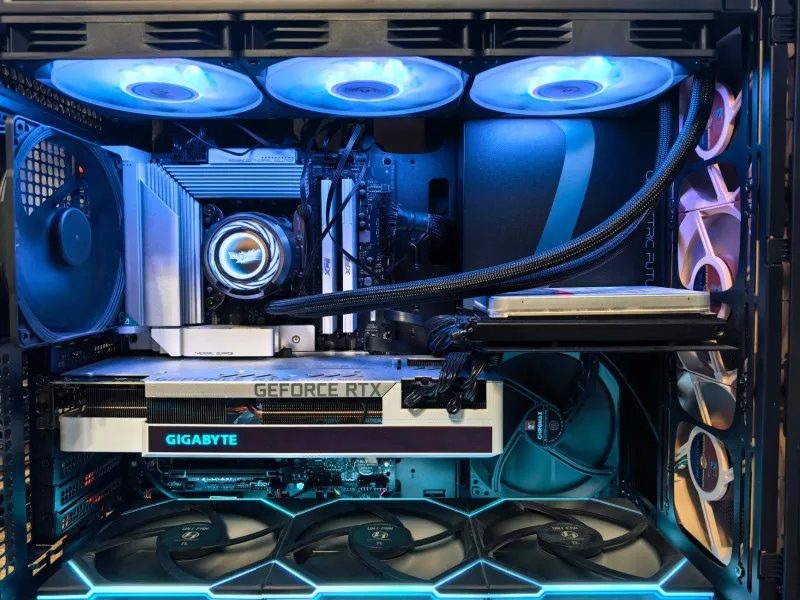
Contrast that with a mid-range gaming PC purchased outright. A well-specified build — featuring a current-generation discrete GPU, 16GB of DDR5 RAM, a 1TB NVMe SSD, and a capable processor — can be assembled in the UK for approximately £900 to £1,100 using quality components from established distributors. Games purchased outright, particularly during seasonal sales, frequently cost a fraction of their launch price within months of release, and they are owned permanently. The total cost of ownership over five years, inclusive of a modest annual software spend, typically falls below that of the cloud equivalent, whilst delivering superior performance and full user control.
Latency: The Problem That Infrastructure Cannot Yet Solve
Beyond the financial calculation, there is a technical reality that marketing materials rarely address with candour. Cloud gaming is fundamentally dependent on low-latency network connectivity. Even under optimal conditions, the round-trip delay introduced by streaming — from controller input to server processing to screen output — adds measurable lag that competitive and fast-paced titles render acutely noticeable.
For users in central London or Manchester, connected via full-fibre broadband with consistent sub-10ms ping times to a nearby data centre, the experience can be acceptable. However, acceptable is not the same as excellent, and many enthusiast gamers regard any perceivable input lag as a material degradation of the experience.
For gamers outside major metropolitan areas, the situation is considerably more challenging. A gamer in rural Shropshire or the Scottish Highlands may be operating on an FTTC connection delivering 30 to 50Mbps with ping times exceeding 40ms. Under these conditions, cloud gaming degrades visibly — introducing compression artefacts, stuttering, and input delays that fundamentally undermine the experience. Local hardware, by contrast, is entirely unaffected by internet quality during gameplay.
 Photo: Scottish Highlands, via i0.wp.com
Postcode Inequality Shapes the Hardware Conversation
The UK's broadband landscape remains deeply stratified in 2025. Ofcom data continues to highlight significant disparity between urban and rural connectivity, with millions of premises outside major towns still unable to access the consistent, low-latency connections that cloud gaming demands. For these consumers, the cloud gaming proposition is not merely suboptimal — it is effectively unusable for anything beyond casual, turn-based titles.
This geographic reality has made hardware ownership the default position for a substantial portion of the British gaming population. A console or gaming PC, once purchased, performs identically regardless of whether the user is in Bristol or Brecon, Edinburgh or the East Riding. That reliability holds considerable appeal for those who have experienced the frustration of a service that simply does not function as advertised in their postcode.
Urban gamers are not immune to disillusionment either. Even those with access to full-fibre connections have reported frustration with cloud gaming during peak evening hours, when network congestion can erode the quality of service regardless of headline broadband speeds. The shared nature of internet infrastructure means that performance is never fully within the consumer's control — a fundamental tension that dedicated hardware eliminates entirely.
The Resurgence of the Dedicated Gaming Machine
Retailers and distributors across the UK have reported renewed interest in dedicated gaming hardware throughout 2024 and into 2025. Discrete graphics card sales have recovered meaningfully from the supply-constrained lows of previous years, with mid-range units now available at competitive price points that were unimaginable during the GPU shortage era. Consumers who deferred hardware purchases during that period are now re-entering the market with considered intent.
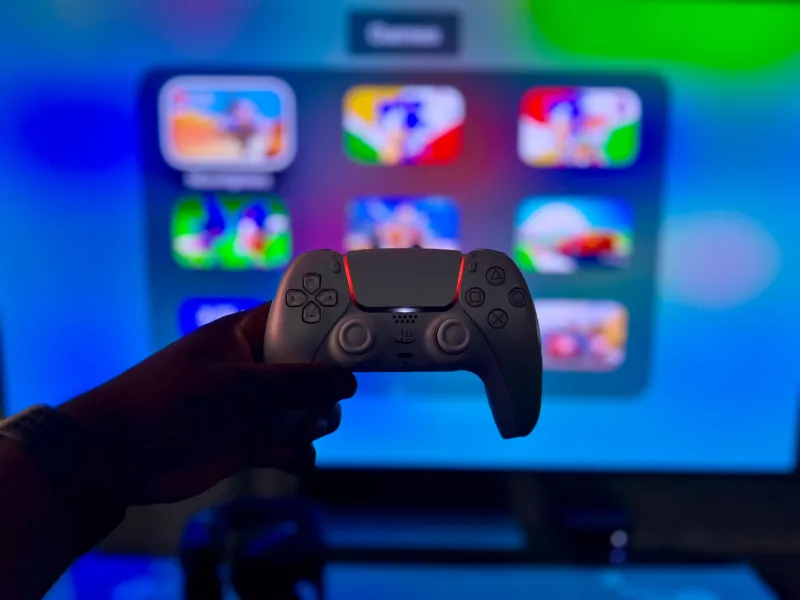
The gaming console market has similarly seen sustained demand, with physical media formats retaining a loyal audience despite industry predictions of their imminent obsolescence. Ownership of a physical disc carries an intrinsic value that streaming access cannot replicate — it can be lent, resold, or simply played without an internet connection.
What Prospective Buyers Should Consider
For British consumers evaluating their gaming setup in 2025, the decision between cloud access and owned hardware warrants careful analysis. Several factors merit particular attention:
Total cost over time. Cloud subscriptions compound annually. Hardware, properly maintained, delivers diminishing cost per hour of use over its operational lifespan.
Connectivity reliability. Those in areas with inconsistent broadband, or those who game during peak hours, should approach cloud gaming with realistic expectations regarding performance consistency.
Game ownership and longevity. Purchased titles remain accessible indefinitely. Streamed access is contingent on commercial agreements that are not within the consumer's control.
Upgrade flexibility. A gaming PC allows incremental component upgrades — a new graphics card, additional memory, expanded storage — extending the useful life of the investment without a complete replacement cycle.
The cloud gaming model may yet find its audience among casual consumers who game infrequently and value low upfront cost above all else. For the dedicated gaming community in Britain, however, 2025 has clarified what was always likely to be true: ownership of capable, reliable hardware remains the most dependable foundation for a quality gaming experience.