Beyond the Subscription Trap: Inside Britain's Quiet Home Server Revival
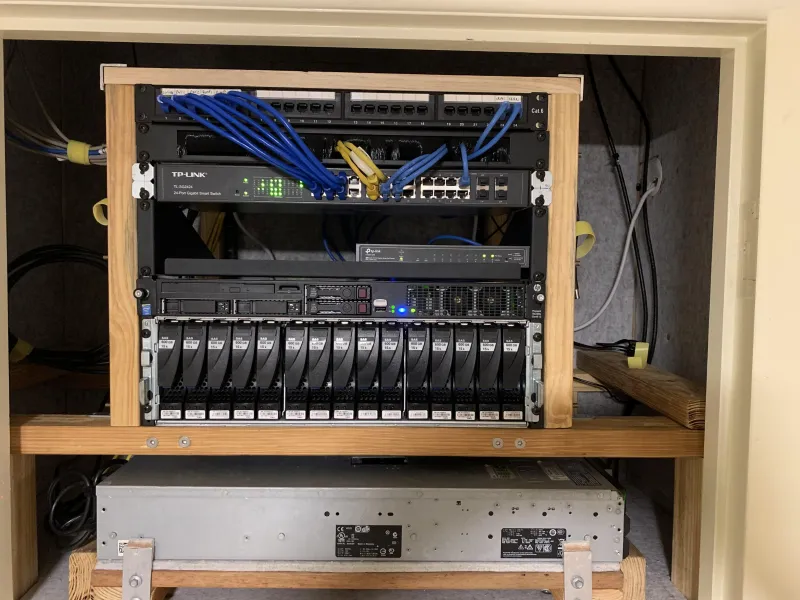
Photo: home server NAS setup in cupboard with hard drives, via i.redd.it
There is a particular satisfaction in watching a file transfer to your own server — no upload queue, no monthly invoice, no company quietly changing its terms of service. For a growing number of British households, that satisfaction has hardened into a full-scale movement: the home-built private cloud.
Why the DIY Cloud Is Having a Moment
The arithmetic is hard to ignore. A mainstream cloud storage plan at £8.99 per month costs £539 over five years. A streaming household with two or three subscriptions can easily spend double that. Meanwhile, a capable second-hand mini PC or a compact NAS build can be assembled for £250–£500, with the storage drives as the main variable.
The appeal is not purely financial. Self-hosting puts data under the owner's control — photographs, home videos, documents — without entrusting them to a distant data centre. For households with large media libraries, it also removes the compression and catalogue churn that come with commercial streaming.
What Hardware Do You Actually Need?
The entry tier is simpler than most people expect. A refurbished office desktop or mini PC with an Intel 8th-generation or newer processor, 16GB of RAM, and a pair of sizeable drives will comfortably run media server software and automated backups. Budget £250–£400, depending on storage capacity.
The mid-tier introduces purpose-built NAS enclosures or a small rack-style case, ECC-capable platforms, and drive bays that allow expansion. Expect £600–£900 all-in. This is the sensible ceiling for most families: quiet enough for a hallway cupboard, powerful enough for several simultaneous users.
Above that lies enthusiast territory — used enterprise servers, rack rails in the garage, uninterruptible power supplies. Impressive, but rarely justified for a household of four.
The Energy Question Under the Price Cap
Running costs are where home servers are won or lost in Britain. With the current energy price cap hovering around 24–25p per kWh, every watt matters. A well-chosen mini PC idles at 8–15 watts, costing roughly £18–£33 per year. A tower built from older desktop parts might draw 40–60 watts at idle, pushing annual electricity costs towards £90–£130. An old enterprise server, with its screaming fans and hungry power supply, can exceed £250 per year before it stores a single useful file.
The lesson: efficiency is the specification that matters most. Modern low-power processors, laptop-class components, and aggressive sleep states transform the economics.
Five Years In: Does Self-Hosting Win?
Modelled conservatively — a £400 build, £60 of replacement storage, and £25 of annual electricity — a five-year home server costs around £585. That is comparable to a single cloud storage subscription and dramatically cheaper than a household's combined media and storage bills. Add the resale value of the hardware at the end, and the balance tips decisively.
The honest caveat is time. Self-hosting demands an evening of setup and occasional maintenance. For households willing to invest that, the return is a private, expandable, subscription-free digital life. For everyone else, it is at least worth knowing the cupboard in the hall can do the job of several companies — quietly, and on your terms.