The New Reality of British Remote Working
The landscape of British employment has fundamentally shifted. With over 40% of UK workers now operating in hybrid arrangements, the home office has evolved from a luxury to an operational necessity. Yet many remote employees struggle with inadequate setups that hamper productivity and professional credibility.
The challenge isn't simply about having a computer—it's about creating an environment that matches the efficiency and ergonomics of traditional office spaces. After extensive market analysis, we've identified how UK remote workers can achieve this transformation for under £500, provided they approach procurement strategically.
Strategic Component Selection Over Pre-Built Solutions
The temptation to purchase complete "home office bundles" proves costly and inflexible. Our analysis reveals that component-level purchasing delivers superior value and customisation potential. Consider a typical £450 pre-built package: whilst convenient, such bundles often compromise on critical elements like monitor quality or peripheral functionality.
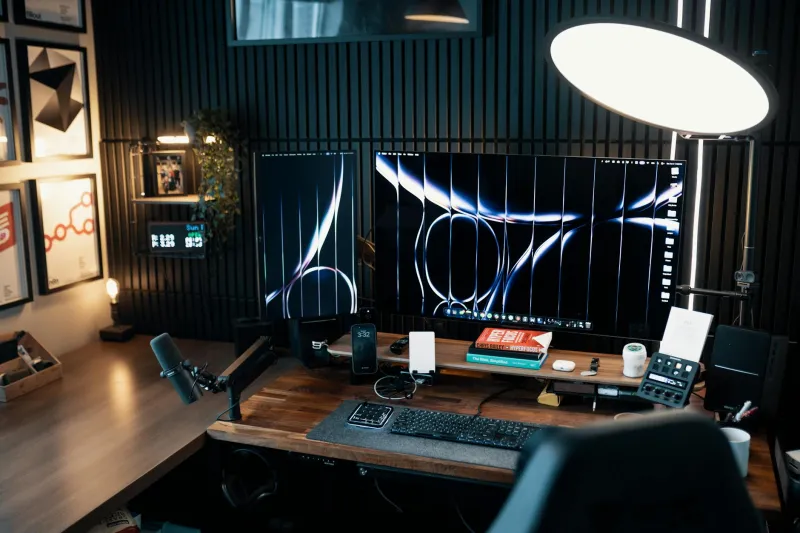
Instead, strategic buyers focus on core productivity multipliers. A quality 24-inch IPS monitor (£120-150) provides the foundation for efficient multitasking, whilst a mechanical keyboard and precision mouse combination (£60-80) ensures comfort during extended working sessions. This targeted approach allocates budget where impact is greatest.
The Monitor Dilemma: Size Versus Quality
Monitor selection represents the most critical decision in home office configuration. British remote workers frequently underestimate the productivity gains from proper display technology. A single high-quality 24-inch monitor outperforms dual budget displays, providing consistent colour reproduction and reduced eye strain during video conferences.
For professionals handling detailed work—accountants, designers, or data analysts—investing £150-180 in a colour-accurate IPS panel proves worthwhile. The remaining budget accommodates essential peripherals without compromise. Conversely, general office workers achieve excellent results with quality VA panels at £100-130, freeing resources for ergonomic accessories.
Connectivity and Network Infrastructure
Reliable connectivity underpins remote work success, yet many home offices suffer from inadequate network infrastructure. Wi-Fi extenders (£25-40) address coverage issues in larger properties, whilst powerline adapters (£30-50) provide stable connections where wireless proves unreliable.
USB hubs and docking solutions deserve careful consideration. A quality USB-C hub (£40-60) transforms laptop connectivity, providing multiple display outputs and charging capabilities. This single component can eliminate cable clutter whilst supporting professional presentation requirements.
Ergonomic Considerations Within Budget Constraints
Prolonged home working demands attention to ergonomic factors often overlooked in temporary arrangements. An adjustable monitor arm (£30-50) enables proper screen positioning, reducing neck strain and improving posture. Combined with a supportive desk chair (budget £80-120), these investments prevent long-term health issues that could impact career longevity.
Footrests, document holders, and keyboard trays represent minor expenses with significant comfort benefits. Allocating £40-60 for ergonomic accessories within a £500 budget proves prudent for professionals spending 6+ hours daily at their workstation.
Audio and Video: The Professional Presence Factor
Video conferencing quality directly impacts professional perception. Built-in laptop cameras and microphones rarely meet business standards, particularly in domestic environments with challenging acoustics and lighting.
A dedicated webcam (£40-70) and USB microphone (£30-50) transform virtual presence. For professionals in client-facing roles, this investment proves essential. The psychological impact of clear audio and sharp video extends beyond technical considerations—it demonstrates professionalism and attention to detail.
Storage and Backup: Protecting Remote Work Assets
Home offices lack IT department oversight, making data protection a personal responsibility. External drives for backup (£40-60) and cloud storage subscriptions provide redundancy against hardware failure or theft. These costs, whilst ongoing, prove negligible compared to potential data loss consequences.
For professionals handling sensitive information, encrypted storage solutions warrant consideration. Hardware-encrypted drives (£60-90) provide security compliance whilst maintaining performance standards required for daily operations.
The Component Procurement Strategy
Successful home office builds require strategic timing and supplier selection. UK retailers frequently offer competitive pricing on individual components compared to complete systems. Monitoring price fluctuations across multiple suppliers enables optimal purchasing decisions.
Compatibility verification proves crucial when assembling disparate components. Ensuring USB standards match, display connections align, and power requirements are met prevents costly returns and delays. Thorough research before purchase saves both time and budget allocation.
Avoiding Common Pitfalls
British remote workers commonly overspend on unnecessary features whilst neglecting fundamental requirements. Gaming-oriented peripherals, whilst appealing, rarely enhance business productivity. Similarly, premium cable management solutions provide minimal functional benefit compared to basic organisational tools.
Warranty considerations become particularly important for home office equipment experiencing daily use. Prioritising suppliers offering comprehensive UK warranty support ensures rapid resolution of hardware issues that could disrupt professional obligations.
Future-Proofing Within Budget Limitations
A well-planned £500 home office setup should accommodate growth and changing requirements. Modular approaches—such as starting with a single monitor whilst planning for dual-display expansion—provide flexibility without immediate budget strain.
USB-C compatibility ensures longevity as device standards evolve. Investing in hubs and peripherals supporting current and emerging connection standards protects against premature obsolescence.
The Bottom Line
Creating an effective home office for under £500 requires strategic thinking rather than simply purchasing the cheapest available options. By prioritising components that directly impact productivity—quality displays, reliable connectivity, and professional audio-visual equipment—UK remote workers can achieve setups rivalling traditional office environments.
The key lies in understanding which elements deliver genuine value versus those that merely appear impressive. With careful planning and strategic component selection, the £500 budget transforms from a constraint into an opportunity for creating truly efficient remote working environments.