The Shifting Economics of Gaming Hardware
The British gaming landscape stands at a pivotal juncture. For decades, console manufacturers have dominated UK living rooms through carefully orchestrated hardware subsidies and exclusive content strategies. However, 2025 marks a fundamental shift in the economic equation governing gaming hardware decisions.
Traditional console economics rely upon a loss-leader model: hardware sold below cost, profits recouped through software licensing and digital storefront commissions. This approach historically provided British consumers with accessible entry points into gaming ecosystems, typically ranging from £300-£500 per generation. Yet beneath this apparent affordability lies a more complex financial reality that increasing numbers of UK households are beginning to scrutinise.
Breaking Down the True Cost of Console Ownership
A comprehensive analysis of console ownership costs reveals expenses extending far beyond initial hardware investment. British console owners typically encounter:
Subscription Services: PlayStation Plus and Xbox Game Pass subscriptions average £120 annually, accumulating to £840 over a seven-year console generation.
Software Pricing Premiums: Console games maintain higher pricing structures compared to PC equivalents, with new releases averaging £10-£15 more expensive than their Steam counterparts.
Limited Backwards Compatibility: Each generation transition frequently necessitates repurchasing existing game libraries or subscribing to streaming services for legacy content access.
Peripheral Lock-in: Proprietary controllers, storage expansions, and accessories command premium pricing due to limited competition within closed ecosystems.
When aggregated across a typical console generation, these ancillary costs often exceed £2,000—significantly more than the apparent £500 hardware investment suggests.
The PC Alternative: Investment Rather Than Expenditure
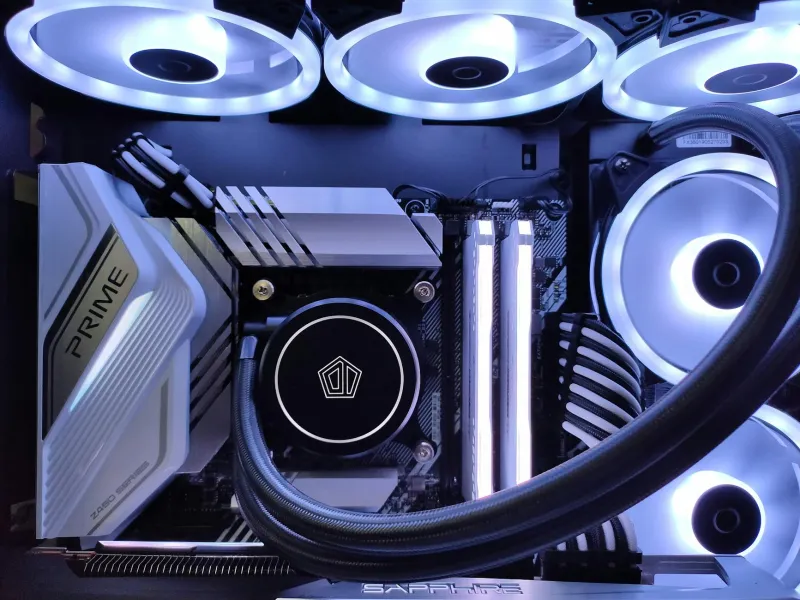
Custom-built gaming PCs present a fundamentally different value proposition. Rather than subsidised hardware with locked ecosystems, PC gaming offers transparent component pricing with extensive upgrade flexibility.
Entry-Level Gaming PC (£800-£1,000) AMD Ryzen 5 7600 processors paired with RTX 4060 graphics cards deliver performance exceeding current-generation consoles whilst maintaining upgrade pathways. These systems handle 1080p gaming at high settings and provide full productivity computing capabilities.
Mid-Range Performance (£1,200-£1,500) Ryzen 7 7700X or Intel Core i5-13600K processors combined with RTX 4070 graphics cards offer 1440p gaming excellence. These configurations provide substantial performance headroom and future-proofing potential.
Enthusiast Builds (£2,000+) High-end processors like the Ryzen 9 7900X paired with RTX 4080 or RTX 4090 graphics cards deliver 4K gaming performance and professional-grade computing capabilities.
Component Pricing Trends Favour PC Investment
The global semiconductor market's stabilisation following pandemic-era disruptions has created favourable conditions for PC component pricing. DDR5 memory costs have declined substantially, whilst SSD storage pricing continues its downward trajectory. Graphics card manufacturers face increased competition, driving performance-per-pound improvements across all market segments.
Simultaneously, console hardware remains constrained by fixed specifications and manufacturing commitments made years in advance. The PlayStation 5 and Xbox Series X, launched in 2020, utilise graphics architectures now surpassed by mid-range PC components.
Versatility: The PC's Compelling Advantage
Beyond gaming performance, custom-built PCs serve multiple household functions that consoles cannot address. These systems excel at:
- Professional productivity applications
- Content creation and streaming
- Educational software and programming
- Home office functionality
- Media centre capabilities
For British households managing tight budgets, this versatility transforms gaming hardware from luxury expenditure into productive investment. A £1,200 gaming PC replaces both entertainment console and home computer, whilst offering superior performance in both roles.
Overcoming Psychological Barriers
Despite compelling economics, British consumers often hesitate before embracing PC gaming due to perceived complexity and established brand loyalties. These concerns, whilst understandable, increasingly lack foundation in contemporary reality.
Modern PC building requires minimal technical expertise, with comprehensive video tutorials and component compatibility databases eliminating guesswork. Pre-built systems from established manufacturers offer console-like convenience whilst preserving upgrade flexibility.
Moreover, digital distribution platforms like Steam, Epic Games Store, and GOG provide user experiences rivalling console ecosystems, complete with automatic updates, cloud saves, and social features.
The Network Effect: Community and Support
The UK's growing PC gaming community provides extensive support networks for newcomers. Online forums, local computer shops, and social media groups offer guidance throughout the building and maintenance process. This community-driven support model often surpasses manufacturer-provided console support in both responsiveness and expertise depth.
Future-Proofing Through Modularity
Perhaps PC gaming's most compelling long-term advantage lies in incremental upgrade capability. Rather than purchasing entirely new systems every seven years, PC owners can refresh individual components as requirements evolve or budgets permit. A graphics card upgrade after three years can restore cutting-edge performance for £400-£600, whilst console owners await next-generation hardware releases.
The Verdict: Economics Favour PC Investment
For British households evaluating gaming hardware investments in 2025, the mathematics increasingly favour custom-built PCs. Initial costs, whilst higher, distribute across versatile systems serving multiple purposes. Long-term software savings, upgrade flexibility, and superior performance create compelling value propositions that traditional console economics struggle to match.
The transition requires overcoming established habits and perceived complexity, yet the financial and performance benefits justify this initial learning investment. As component pricing continues stabilising and community support networks expand, the barriers to PC gaming adoption continue diminishing.
British consumers seeking maximum value from gaming hardware investments should seriously consider the PC alternative. The console loyalty that defined previous generations may prove economically unsustainable in the face of PC gaming's evolving value proposition.