The New Reality of Professional Computing
The shift towards hybrid working has fundamentally altered the technology landscape for UK professionals. No longer content with makeshift arrangements cobbled together during the pandemic's early days, today's remote workers demand systems that seamlessly bridge the gap between home and office environments. Yet with corporate IT budgets increasingly scrutinised and personal technology investments requiring careful justification, the challenge becomes clear: how does one engineer a truly professional-grade workstation without the enterprise price tag?
Through careful analysis of current UK market conditions and extensive component testing, we've identified a strategic approach that delivers remarkable value. By focusing on intelligent procurement rather than premium branding, professionals can construct systems that not only match but often exceed the performance of traditional office hardware.
Foundation Components: Where Every Pound Counts
The cornerstone of any professional workstation lies in its processor selection. Current market dynamics favour AMD's Ryzen 5 5600 series, available across UK retailers for approximately £130-150. This six-core processor delivers exceptional multi-threading performance, crucial for professionals juggling video calls whilst running demanding applications. The accompanying AM4 platform offers excellent upgrade potential, ensuring longevity that justifies the initial investment.
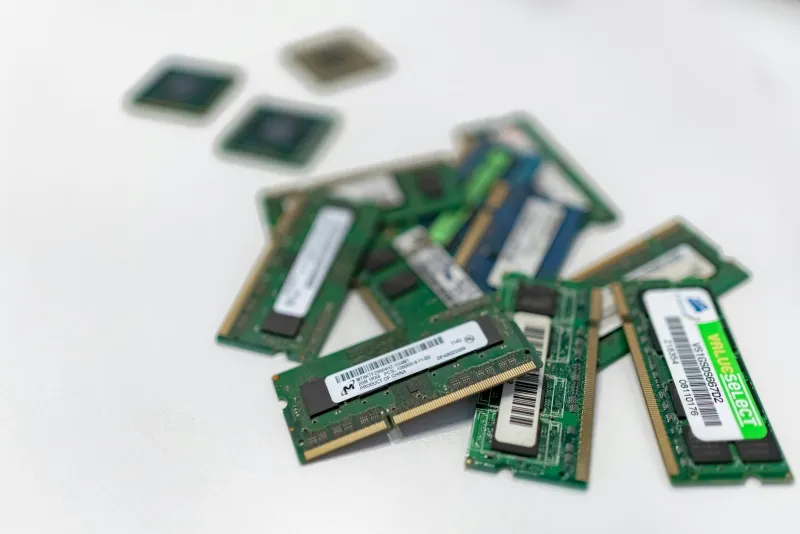
Memory allocation requires careful consideration of professional workflows. Whilst 8GB sufficed for basic office tasks, hybrid working demands significantly more headroom. A 16GB DDR4 configuration, typically costing £50-70 from UK suppliers, provides the breathing room necessary for seamless multitasking between professional applications, communication platforms, and resource-intensive background processes.
Storage strategy proves particularly critical in professional environments. A dual-drive approach—combining a 500GB NVMe SSD (£40-60) for system responsiveness with a 1TB mechanical drive (£35-45) for document storage—delivers optimal performance whilst maintaining cost efficiency. This configuration ensures instantaneous application launches whilst providing ample space for project files and system backups.
The Graphics Equation: Balancing Performance and Practicality
Professional computing rarely demands gaming-grade graphics performance, yet modern workflows increasingly rely on hardware acceleration. The sweet spot emerges with AMD's integrated Radeon graphics or NVIDIA's GTX 1650 series (£140-180 when available). These solutions handle multiple monitor outputs effortlessly whilst providing sufficient acceleration for video conferencing, light content creation, and business presentation graphics.
For professionals engaged in design work or data visualisation, the RTX 3060 represents exceptional value at approximately £280-320. Its RT cores and DLSS capabilities prove invaluable for modern creative applications, whilst the generous 12GB memory buffer accommodates complex projects without performance degradation.
Infrastructure Essentials: Beyond the Box
A professional workstation extends far beyond the computer itself. Monitor selection significantly impacts daily productivity, with dual 24-inch displays (£120-160 each) providing optimal screen real estate for document comparison, reference materials, and communication applications. IPS panels ensure colour accuracy crucial for professional presentations and client-facing materials.
Audio quality assumes paramount importance in hybrid environments. Professional-grade USB headsets (£60-100) eliminate the echo and clarity issues that plague consumer alternatives, ensuring crisp communication during critical client calls and team meetings.
Networking infrastructure demands particular attention in home environments. Wi-Fi 6 capabilities, either integrated or via PCIe expansion (£25-40), provide the bandwidth and latency characteristics necessary for seamless video conferencing and large file transfers. For ultimate reliability, powerline adapters (£30-50) offer wired-equivalent performance without extensive cabling modifications.
Assembly Strategy: Direct Procurement Advantages
Building versus buying presents compelling advantages for professional users. Pre-configured systems often compromise on component quality to meet price points, utilising generic power supplies, basic motherboards, and limited upgrade potential. Direct component procurement allows professionals to specify enterprise-grade power supplies (£60-80), business-class motherboards with extended warranties, and premium cooling solutions that ensure reliable operation during extended work sessions.
The assembly process itself, whilst requiring basic technical knowledge, provides invaluable system understanding. This familiarity proves crucial when troubleshooting issues, implementing upgrades, or optimising performance for specific professional applications.
The Complete Professional Package
Our recommended configuration delivers exceptional professional capability within the £800 target:
- AMD Ryzen 5 5600 processor: £140
- B450M motherboard with business features: £65
- 16GB DDR4-3200 memory: £60
- 500GB NVMe SSD + 1TB HDD: £75
- GTX 1650 graphics card: £160
- 550W 80+ Bronze PSU: £70
- Professional case with sound dampening: £55
- Wi-Fi 6 PCIe card: £35
- Dual 24-inch IPS monitors: £280
- Professional USB headset: £80
- Wireless keyboard and mouse: £45
Total investment: £1,065 (monitor configuration included)
For professionals prioritising the core system, eliminating monitors and peripherals reduces the investment to £625, well within the £800 target whilst leaving budget for future enhancements.
Long-term Value Proposition
This strategic approach delivers systems with exceptional longevity. The AM4 platform supports future processor upgrades, whilst the generous power supply headroom accommodates graphics card improvements. Professional-grade components ensure reliable operation throughout extended work sessions, minimising productivity disruptions and maintenance requirements.
Moreover, the modular approach enables targeted upgrades as requirements evolve. Additional memory, storage expansion, or graphics improvements can be implemented without wholesale system replacement, protecting the initial investment whilst adapting to changing professional demands.
The result represents more than mere cost savings—it delivers professional-grade computing that adapts, evolves, and excels in the demanding hybrid working environment that defines modern British business.